Japan's relationship with sleep looks different to the West's in a lot of small, deliberate ways. Some of it comes down to necessity — brutally hot, humid summers have forced innovation in how bedrooms are set up for centuries. But a lot of it comes down to a simple cultural instinct: that a bedroom is a space you prepare, not just a room you happen to fall asleep in.
Bedding that changes with the seasons
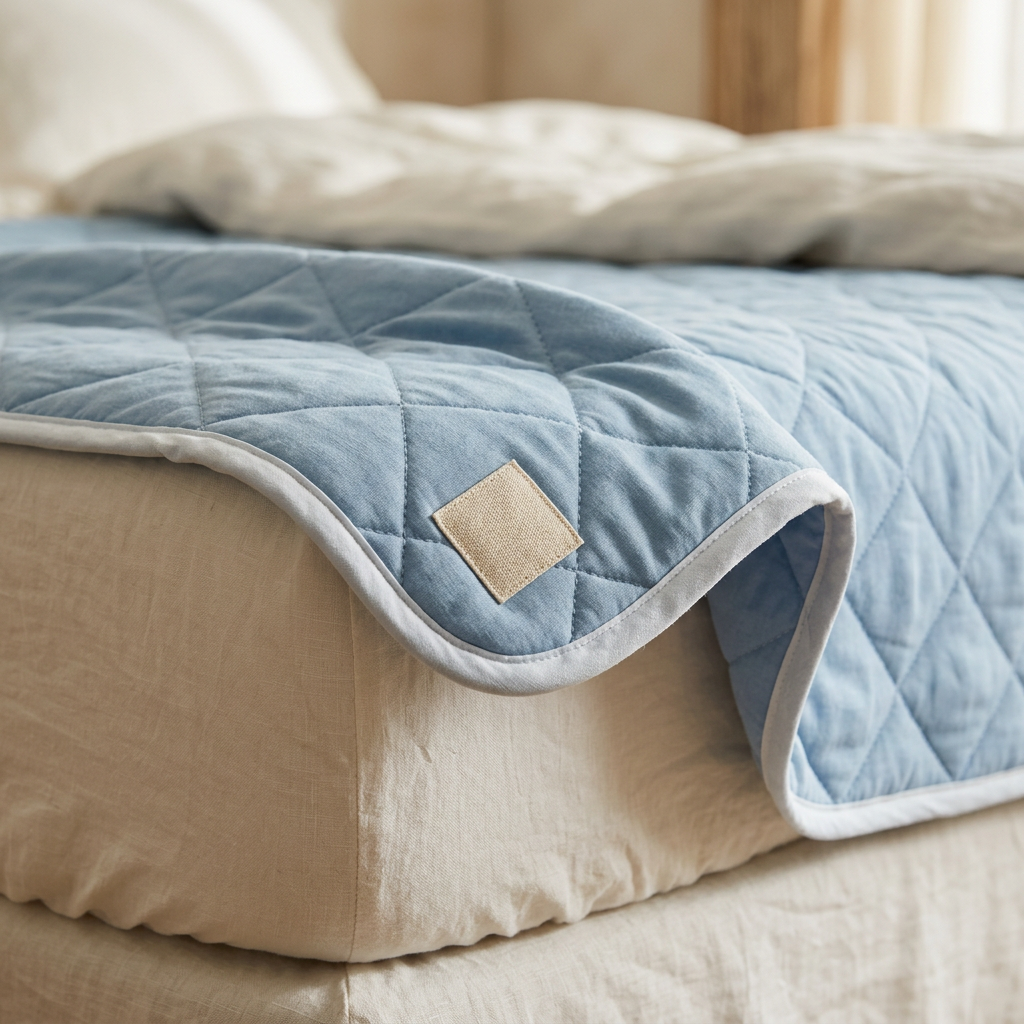
In many Japanese households, bedding isn't a single, fixed setup used year-round. Futons, covers and sheets are swapped seasonally — lighter, more breathable materials for the hot, humid summer months, heavier and more insulating ones for winter. It's a simple idea that's largely absent from how most Western households think about bedding, where a single duvet is expected to work in July and January alike.
This seasonal swap isn't cosmetic. Summer bedding in Japan is chosen specifically for how it manages heat and moisture against the skin, which is exactly the problem most people are still trying to solve with a single, all-purpose duvet.
The evening bath as a sleep ritual
The evening bath, or ofuro, is a deeply embedded part of daily life in Japan, typically taken an hour or so before bed. Interestingly, this lines up closely with what sleep researchers now recommend: a warm bath or shower raises your skin temperature temporarily, and the rapid cooling that follows as you get out helps trigger the natural drop in core body temperature that signals to your brain it's time to sleep.
What's traditionally a ritual of comfort and cleanliness turns out to be, almost by accident, well-aligned with the biology of falling asleep.
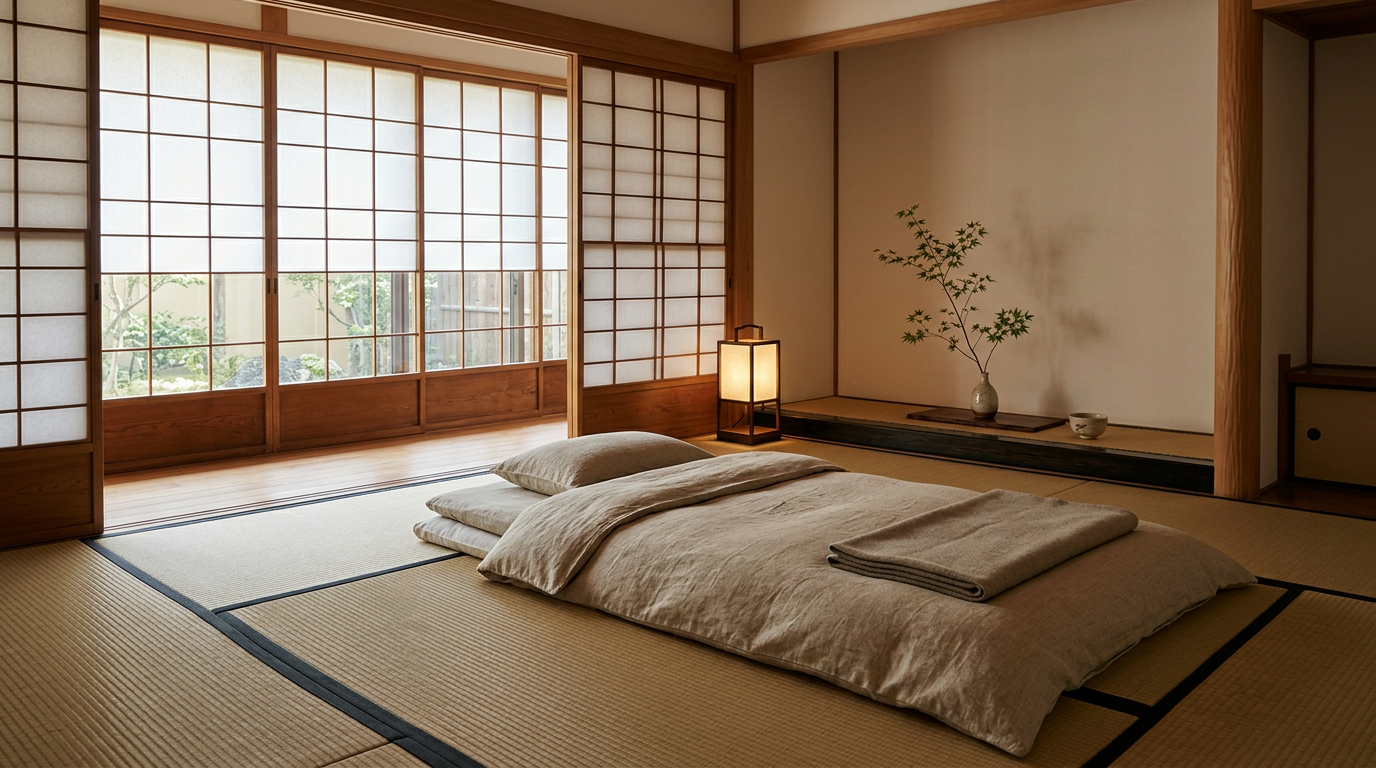
A Japanese bedroom is arranged around one job: helping you sleep well tonight, in the season you're actually in.
Minimalism as sleep hygiene
Traditional Japanese bedrooms tend to be sparse — a futon, simple lighting, little visual clutter. This isn't purely aesthetic. Sleep researchers in the West have separately arrived at similar conclusions: a bedroom with fewer visual distractions, less clutter, and a clear association with rest (rather than work, screens, or general storage) supports faster, more consistent sleep onset.
A few principles worth borrowing
- Match your bedding to the season, rather than using one setup year-round.
- Build a short wind-down ritual — a warm bath or shower an hour before bed is a well-supported habit, not just a Japanese one.
- Keep the bedroom simple. A space reserved mainly for sleep, with minimal clutter, tends to support better sleep than one that does double duty as an office or storage room.
None of this requires moving to a tatami room. It's really a shift in mindset — treating your bedroom setup as something to actively adjust and maintain, rather than something you set once and forget.