
Most advice about sleep focuses on the bedroom itself — mattresses, bedding, temperature. All of that matters, but a lot of sleep quality is actually decided in the one to two hours before you get into bed. A short, consistent evening routine does more for sleep quality than almost any single product change.
1. Pick a wind-down time — and protect it
The single most consistent finding in sleep research is that a regular sleep schedule, including on weekends, supports better sleep quality than an "ideal" bedtime that shifts around. Your circadian rhythm relies on consistency far more than precision. Going to bed at a fairly fixed time most nights matters more than whether that time is 10pm or 11pm.
2. Let your body temperature drop naturally
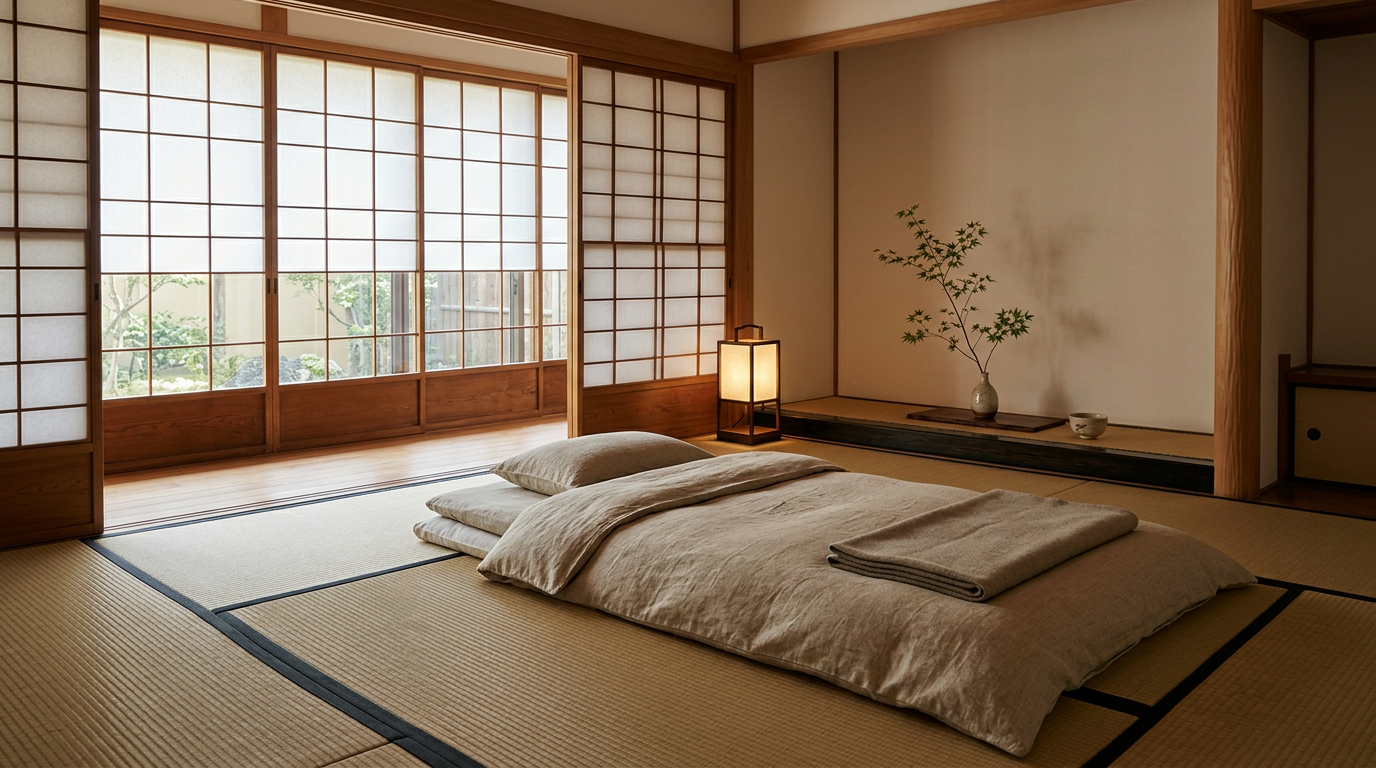
A warm bath or shower 60–90 minutes before bed is one of the best-supported sleep rituals there is — a habit with deep roots in cultures with strong evening bathing traditions, Japan among them. It works almost by accident: the warmth raises your skin temperature slightly, and the rapid cooling afterwards helps trigger the natural drop in core temperature your body uses as a signal to fall asleep.
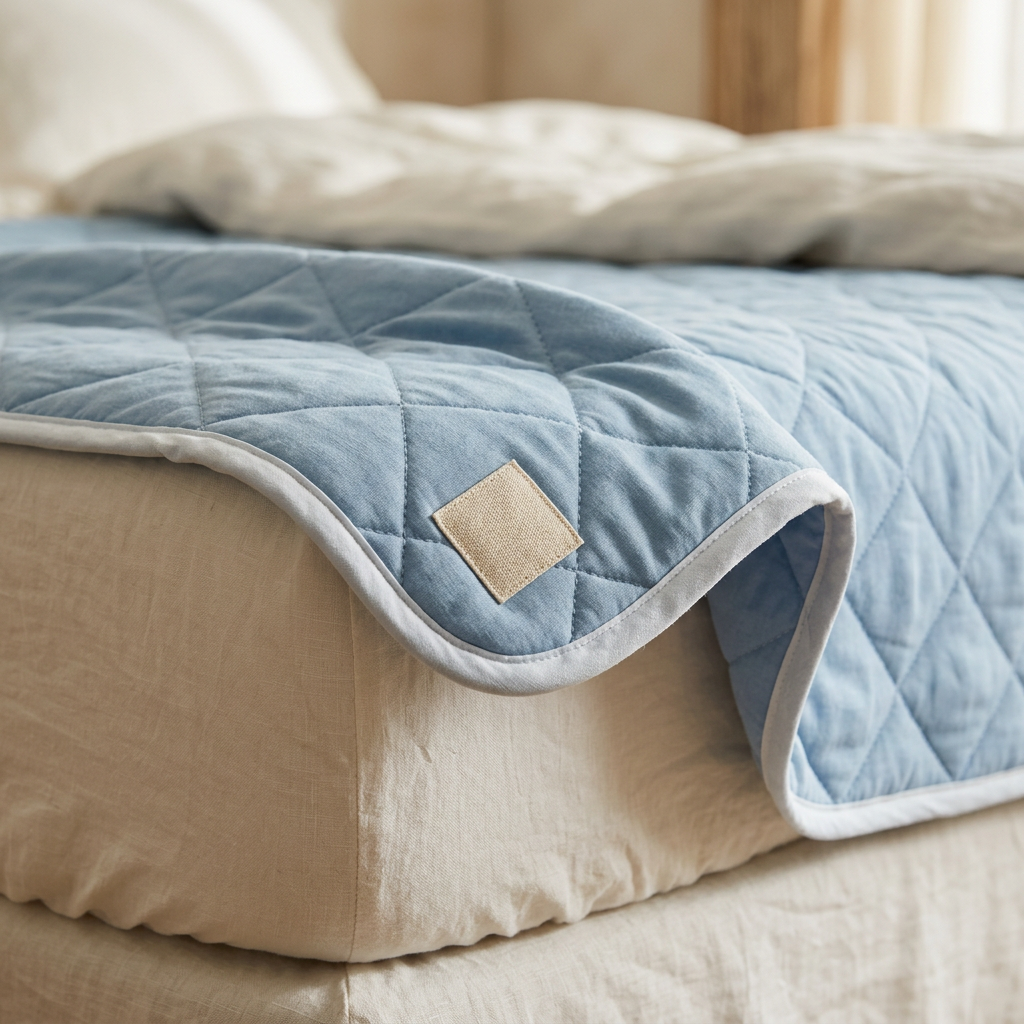
The same principle applies to your bedroom itself — a room that's slightly cooler than feels necessary, and bedding that doesn't trap heat against the skin, both work with this natural cooling process rather than against it.
3. Dim the lights earlier than you think
Bright light in the evening, especially from screens, suppresses melatonin, the hormone that signals to your body that it's time to sleep. Dimming household lights an hour before bed, and switching devices to night mode or putting them away entirely, gives your body a clearer signal that the day is winding down.
Sleep isn't something you can force in the last ten minutes before bed. It's the result of what your evening looked like for the hour before that.
4. Get worries out of your head and onto paper
Racing thoughts are one of the most common reasons people struggle to fall asleep. A short "worry journal" — writing down anything on your mind, or tomorrow's to-do list, before bed — has been shown in several studies to reduce the time it takes to fall asleep, simply by giving your brain permission to stop holding onto those thoughts.
5. Watch caffeine and alcohol timing, not just quantity
Caffeine has a half-life of around five to six hours, meaning a mid-afternoon coffee can still be roughly half-active in your system at bedtime. Alcohol, despite feeling sedating, disrupts the second half of the night's sleep cycle and can worsen night sweats and temperature regulation. Both are worth watching for timing as much as total amount.
Building a routine that actually sticks
The habits above work best in combination, not isolation, and they work best when they're simple enough to actually repeat every night. A realistic starting routine might be: dim the lights, have a warm shower, write down anything on your mind, and get into a cool, comfortable bed at a consistent time. Small and repeatable beats elaborate and occasional, every time.