"Cooling" has become one of the most overused words in bedding marketing, and it covers products that work in genuinely different ways, with very different results. Broadly, cooling bedding falls into four categories. Understanding the difference is the single most useful thing you can do before spending money on any of them.
1. Moisture-wicking fabrics
These are fabrics engineered to pull moisture away from your skin and spread it across a larger surface area, where it can evaporate faster. Materials like certain treated cottons, bamboo-derived fibres, and some technical synthetics fall into this category. They don't lower your temperature directly, but by managing sweat more efficiently, they reduce the "damp and sticky" feeling that makes overheating so uncomfortable.
2. Sprayed or surface cooling coatings
A large share of budget "cooling" pads on the market use a cooling gel or mineral coating sprayed onto the surface of the fabric. These can feel cool to the touch initially — largely because the coating has a naturally lower surface temperature — but the effect is superficial and tends to fade with washing, since the coating sits on top of the fibres rather than being part of them.
3. Phase Change Materials (PCM)
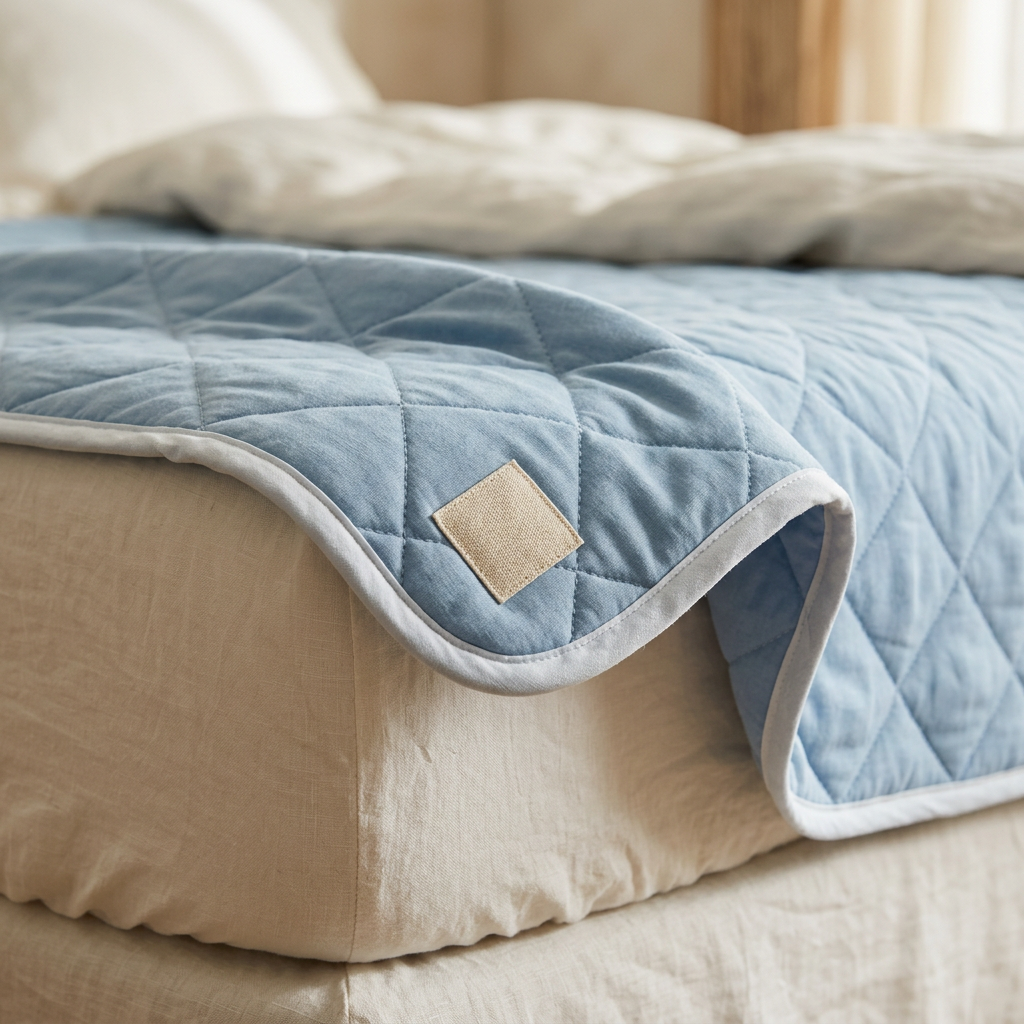
PCM is a different approach entirely. Rather than coating a fabric, phase change material is embedded into the fill or fibre structure itself. PCMs work by absorbing heat as they transition from a solid to a liquid state, and releasing that heat again as they transition back — a physical process rather than a surface treatment.
In practice, this means PCM-based bedding can absorb excess body heat as you warm up, and release it gradually as you cool down, helping smooth out the temperature swings that disturb sleep. Because the material is embedded through the fill rather than coated onto the surface, it doesn't wear off in the same way a sprayed treatment does. Countries with long histories of hot, humid summers — Japan among them — have used this kind of technology in domestic bedding for years, driven by real demand rather than novelty.
The difference between a coating and an embedded material is the difference between something that feels cool for a week, and something engineered to keep working.
4. Actively powered cooling systems
At the top end of the market are electronically controlled mattress toppers with water or air circulation, app controls, and adjustable temperature settings. These can offer more precise, adjustable cooling, but they come with real trade-offs: a significant upfront cost, ongoing power use, setup and maintenance, and — because they rely on pumps or compressors — some level of operating noise.
What to actually look for when buying
- Embedded vs. sprayed: ask (or check reviews) whether the cooling technology is built into the fill or fibre, or just coated onto the surface. This is the single biggest factor in whether the effect lasts past the first few washes.
- Washability: a genuinely embedded material should hold up to regular machine washing without losing effectiveness. A surface coating usually won't.
- Maintenance and power needs: passive materials like PCM require no power, no setup, and no ongoing maintenance, unlike actively powered systems.
- How it's made and where: UK and European manufacturers working with established PCM suppliers have real incentive and expertise in this category, the same way markets with long histories of hot summers do.